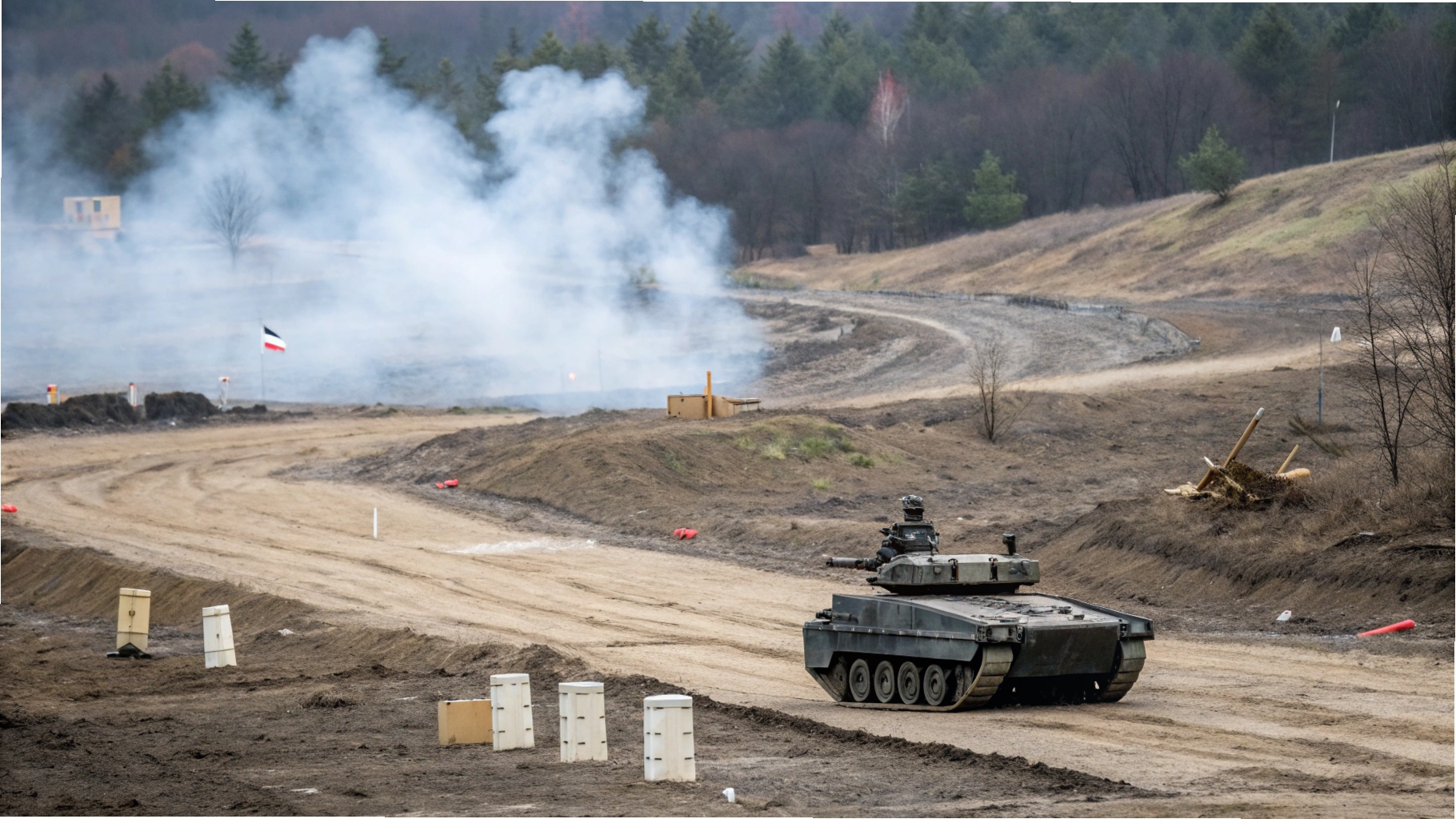
US Army Selects Six Companies to Develop Autonomous Vehicles for Frontline MissionsThe US Army has selected six defense companies to develop production-ready unmanned ground vehicle (UGV) prototypes for missions involving frontline logistics and casualty evacuation.The initiative, known as the Infantry Last Tactical Mile (ILTM) program, is designed to explore how autonomous ground vehicles can support soldiers operating in exposed forward positions. The objective is to reduce the requirement for troops to personally perform certain high-risk transportation and resupply tasks.The six selected companies are Maren-Go, Overland AI, Forterra, Hendrick’s Motorsports, American Rheinmetall, and HDT. Their participation will involve developing UGV prototypes capable of supporting military units during demanding frontline operations.The ILTM concept focuses on the difficult final stage of logistics between rear support locations and troops deployed closer to the battlefield. Delivering supplies, equipment, and other essential resources to these positions can expose soldiers and conventional vehicles to increased risks.Autonomous ground systems could provide an alternative by allowing supplies to be transported with fewer personnel directly exposed to dangerous areas. The same technology could also support casualty evacuation missions, potentially helping move injured personnel away from forward positions.The Army’s decision reflects growing interest in autonomous systems as military forces examine ways to combine human operators with unmanned platforms. UGVs can potentially perform repetitive transportation tasks while allowing soldiers to concentrate on combat and other mission-critical activities.The selection of multiple companies also gives the Army an opportunity to examine different approaches to vehicle design, autonomy, mobility, and mission integration. The resulting prototypes are expected to help determine which technologies can meet the operational requirements of infantry units.The ILTM effort highlights the broader shift toward using unmanned systems to reduce personnel exposure and improve logistical efficiency. As autonomous technologies mature, ground robots are increasingly being considered for missions that previously depended heavily on soldiers and conventional vehicles.The program therefore represents another step in the Army’s effort to introduce autonomous capabilities into frontline operations while maintaining human control over critical military decisions.