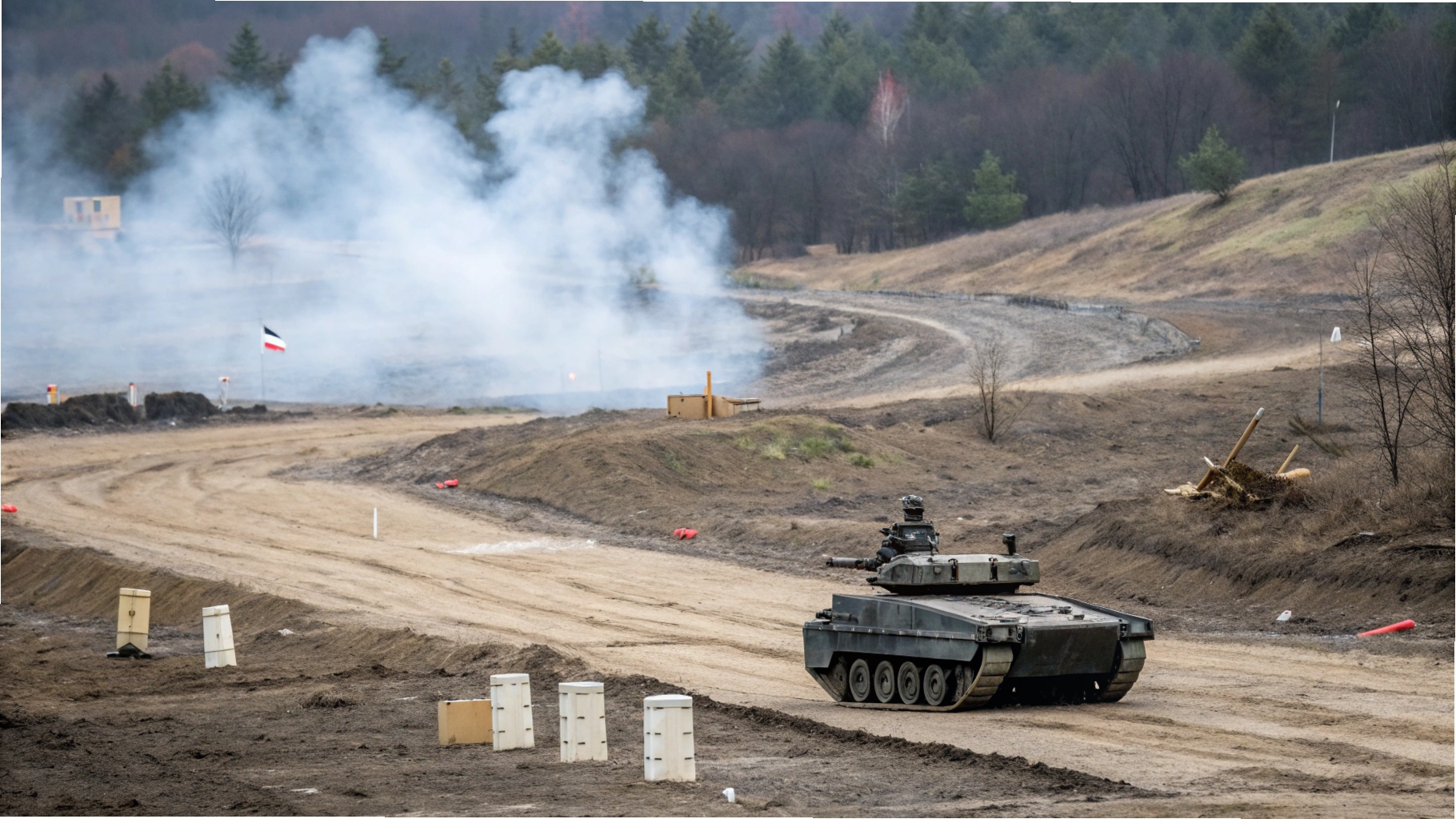
Temerland, a Ukrainian developer of unmanned military systems, has unveiled the Gnom L2, a modified unmanned ground vehicle intended to move heavier loads while operating across demanding terrain. The platform represents an evolution of the company’s Gnom Logistic modular UGV, which has already entered service with Ukrainian military users. The latest version focuses on improving the vehicle’s endurance, cargo capacity, and ability to negotiate difficult ground. A major upgrade incorporated into the Gnom L2 is its higher-capacity battery system. By increasing available energy, Temerland aims to extend the vehicle’s operating time and reduce the frequency with which it needs to return for recharging. Longer endurance can be valuable for military logistics missions, particularly when unmanned vehicles are expected to operate at considerable distances from support areas or in environments where movement by conventional vehicles is risky. The vehicle also features a reinforced cargo basket designed to handle heavier military loads. This modification expands the practical utility of the platform by enabling it to transport additional supplies and equipment. Unmanned logistics vehicles can be particularly useful for delivering supplies to forward positions, where sending manned vehicles could expose drivers and other personnel to battlefield threats. The Gnom L2 further differentiates itself through a hybrid wheel-and-track configuration. The combination is intended to improve off-road mobility and allow the vehicle to operate across a wider range of terrain conditions. Wheels can provide efficient movement over suitable surfaces, while tracks can improve traction and mobility in rougher environments. The approach is consistent with the wider development of robotic military vehicles designed around specific battlefield challenges rather than simply replicating conventional vehicle designs without crews. Ukraine has become a significant testing ground for unmanned ground systems, with military operators increasingly exploring robotic platforms for logistics, reconnaissance, casualty evacuation, engineering, and other support missions. The experience has encouraged developers to focus heavily on reliability, modularity, payload capacity, endurance, and mobility. The Gnom L2 builds on that development path by strengthening the logistics role of the existing Gnom platform. Its modular heritage could also make it adaptable to different military requirements as operational conditions evolve. By increasing battery capacity and cargo strength while introducing a hybrid mobility arrangement, Temerland has sought to create a UGV better suited to transporting heavier loads across difficult terrain. The Gnom L2 therefore represents another step in the development of Ukraine’s domestic robotic vehicle ecosystem, where unmanned platforms are increasingly being designed to perform practical battlefield support missions while reducing the exposure of personnel to dangerous operating environments.