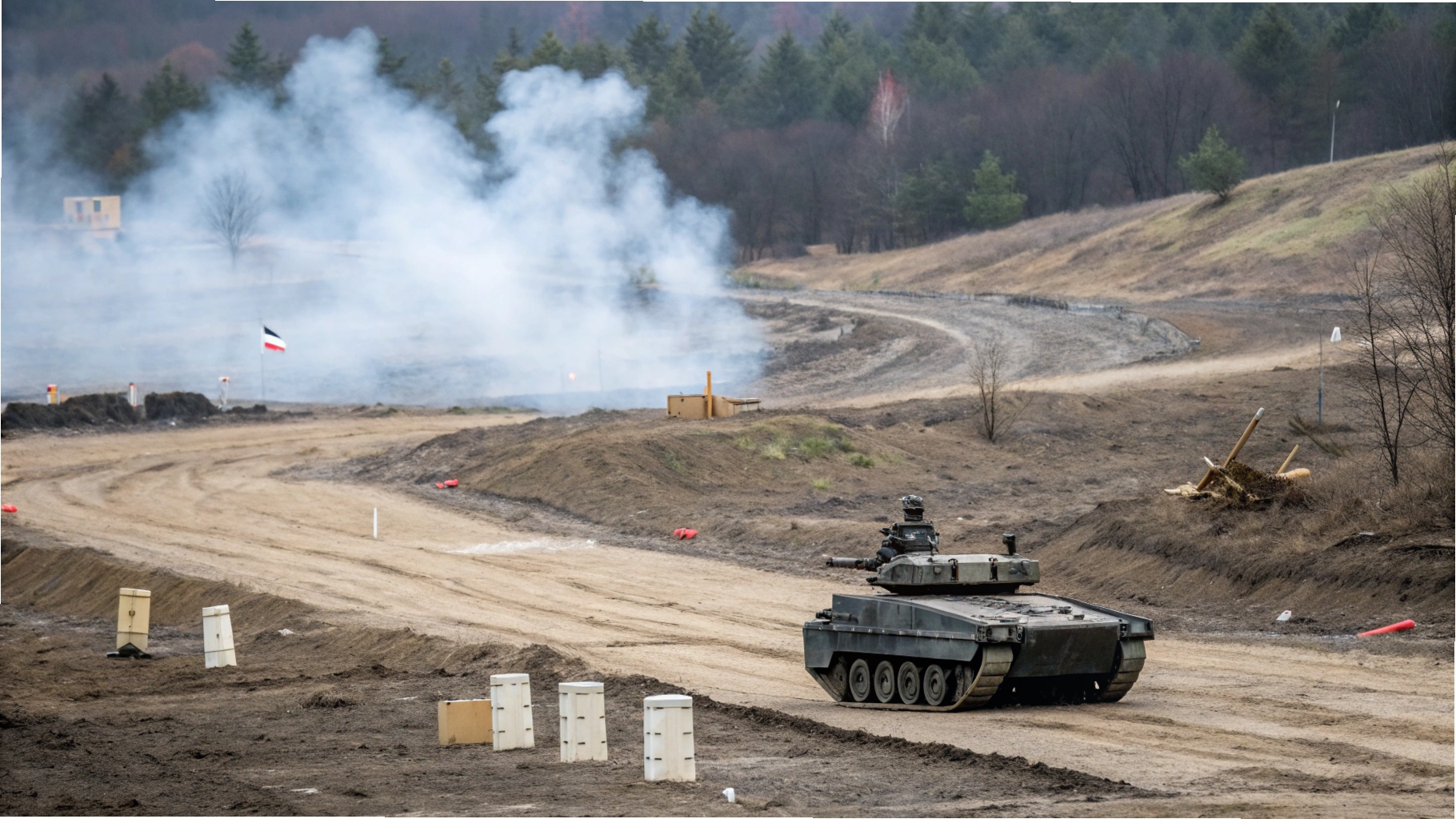
Japan’s Ground Self-Defense Force (JGSDF) has initiated evaluation trials of two European-made unmanned ground vehicles — the Rheinmetall Mission Master SP and Milrem Robotics’ THeMIS — to assess their suitability across a spectrum of operational scenarios. The move underscores Japan’s determination to expand automation and unmanned capabilities as it faces both regional military competition and domestic manpower shortages caused by demographic decline. According to the country’s acquisition agency, the program aims to promote automation, labor efficiency, and force optimization through robotic integration. The JGSDF acquired three units of each platform in 2024 for testing. Rheinmetall’s Mission Master SP is an electrically powered, low-signature vehicle engineered for modularity and rapid payload interchange. The three configurations under evaluation include cargo transport, reconnaissance, and a remotely operated weapon system. Its amphibious capability allows movement through water at 6 km/h and land speeds of up to 40 km/h when lightly loaded. Each unit can carry up to 1,000 kilograms of payload and be reconfigured within minutes to meet mission demands. Meanwhile, Milrem’s THeMIS is a tracked UGV capable of reaching 20 km/h and operating for up to eight hours continuously. It can be armed with machine guns, grenade launchers, or anti-tank guided missiles, making it adaptable for both combat and logistics roles. The standard THeMIS load capacity of 750 kilograms can be extended to 1,200 kilograms. Both systems are being examined for potential integration into Japan’s future unmanned ground force structure. These trials reflect Tokyo’s increasing focus on robotics to maintain operational readiness while reducing risks to personnel in high-threat environments.