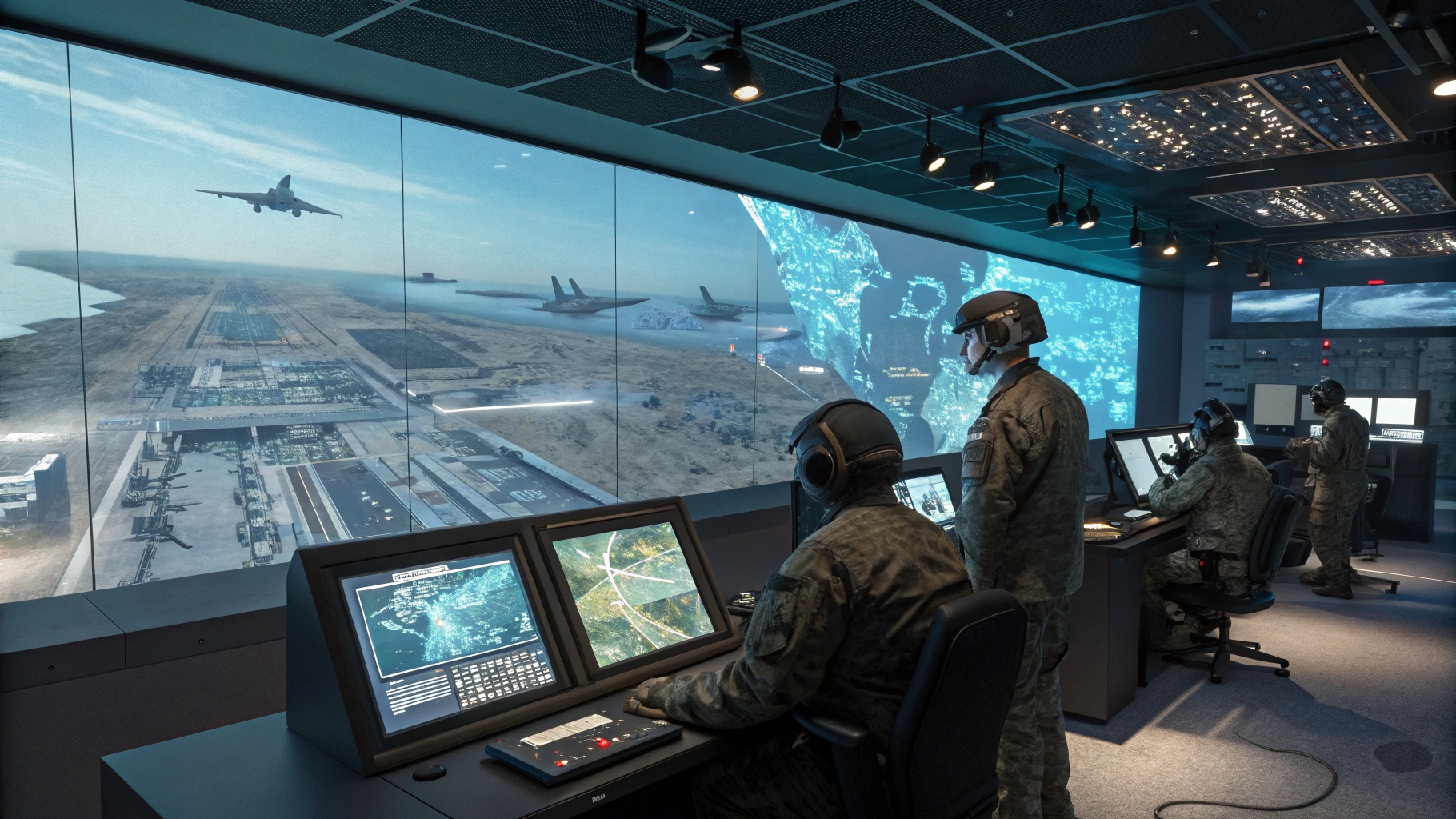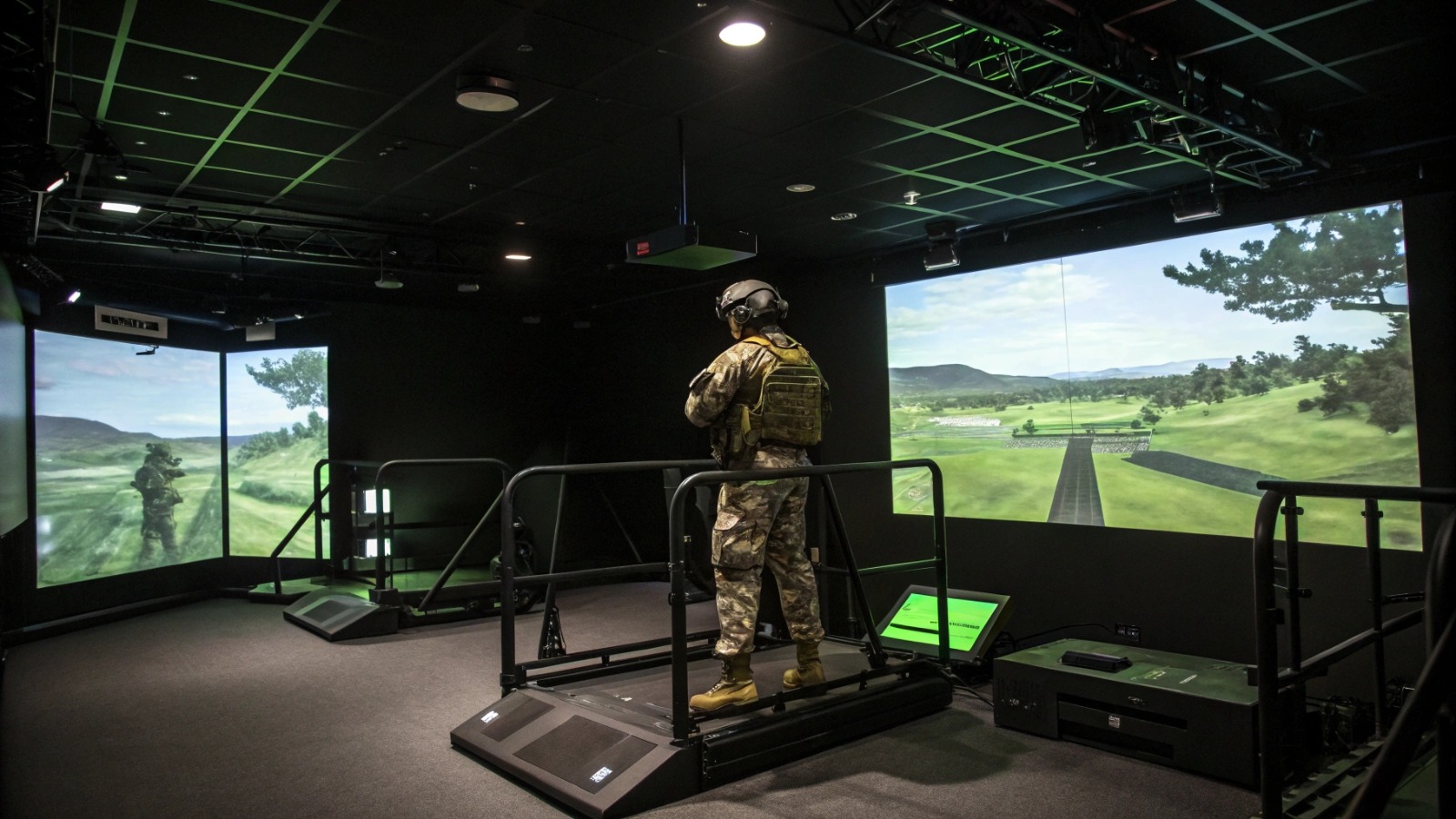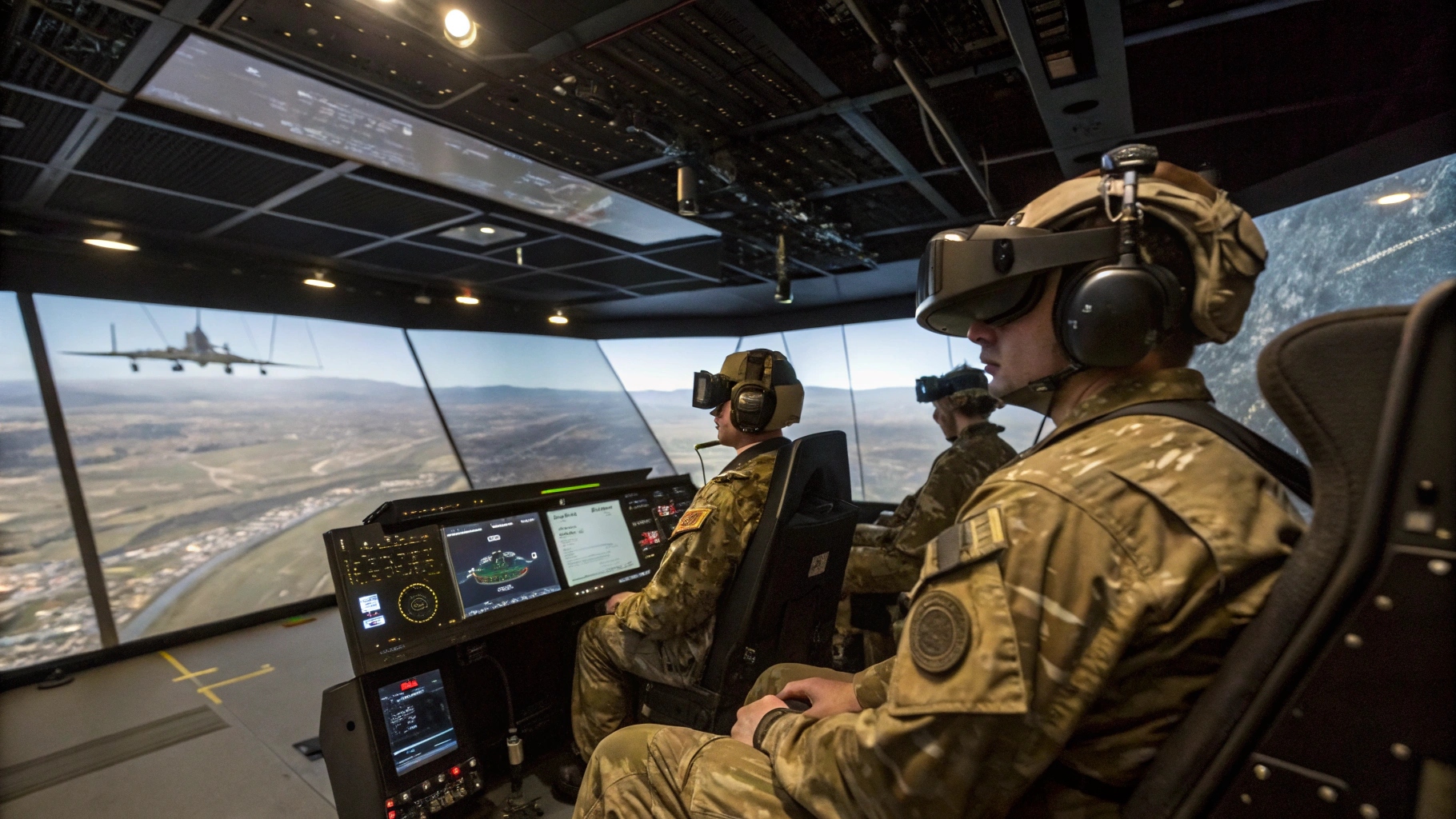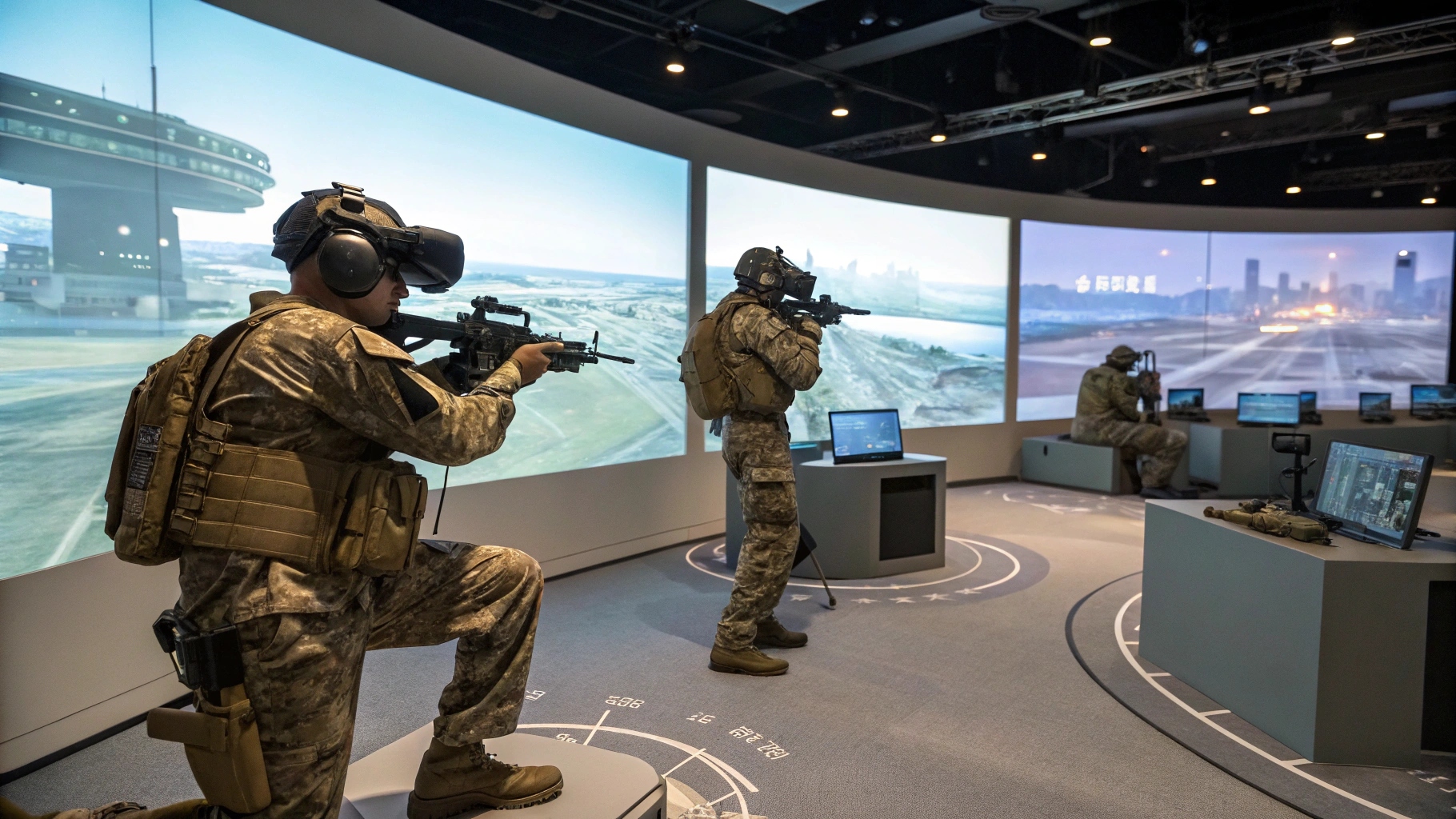
A new multi-user virtual reality training platform developed by the Simulator Development Division is designed to give military and law-enforcement personnel a realistic digital environment for practicing urban warfare and high-risk tactical operations. The system combines immersive virtual environments, artificial-intelligence-driven participants, instrumented weapons, ballistic modeling, and real-time instructor monitoring to create a repeatable training framework. The simulator is designed for teams rather than individual users, allowing personnel to practice coordinated movements and communications across complex scenarios. Its training library can include close-quarter battle situations, building-clearing missions, rooftop engagements, rural insertion exercises, and kill-house operations. These scenarios can be modified according to training requirements, giving instructors the ability to adjust threats, locations, and mission conditions. Artificial-intelligence-controlled hostile and civilian agents add further complexity by creating dynamic situations that require trainees to make decisions while responding to changing circumstances. Environmental conditions can also be adjusted, including weather, lighting, and time-of-day settings. This flexibility allows training organizations to expose personnel to a broad range of conditions without having to construct or physically modify multiple training environments. Another important element is the integration of instrumented weapon peripherals and realistic ballistic calculations. These technologies are intended to provide trainees with a more authentic representation of weapon handling and engagement conditions. At the same time, instructors and commanders can monitor activities throughout an exercise using dedicated observation tools. Performance information can be used to assess marksmanship, communication, tactical coordination, and individual decision-making. This measurement capability enables training staff to identify specific weaknesses and repeat exercises to improve performance. The system is also designed to support high-frequency training while reducing some of the logistical requirements associated with conventional live exercises. Physical urban warfare training can require specialized facilities, large training areas, safety arrangements, ammunition, personnel, and considerable preparation. A virtual environment provides an alternative method for rehearsing scenarios repeatedly and modifying them rapidly. The multi-user capability is particularly relevant for missions in which team coordination is critical. Personnel can practice movement, communication, threat identification, and decision-making together rather than training these skills in isolation. The simulator therefore bridges traditional tactical drills and digital immersion, providing a controlled environment in which high-risk situations can be rehearsed safely. Its combination of realistic scenarios and measurable performance data can support continuous training and assessment. The scalable nature of the platform also makes it suitable for organizations with recurring readiness requirements. By allowing military and security personnel to repeatedly train against complex urban scenarios, the system is intended to strengthen tactical proficiency, improve decision-making speed, and support operational preparedness across demanding environments.