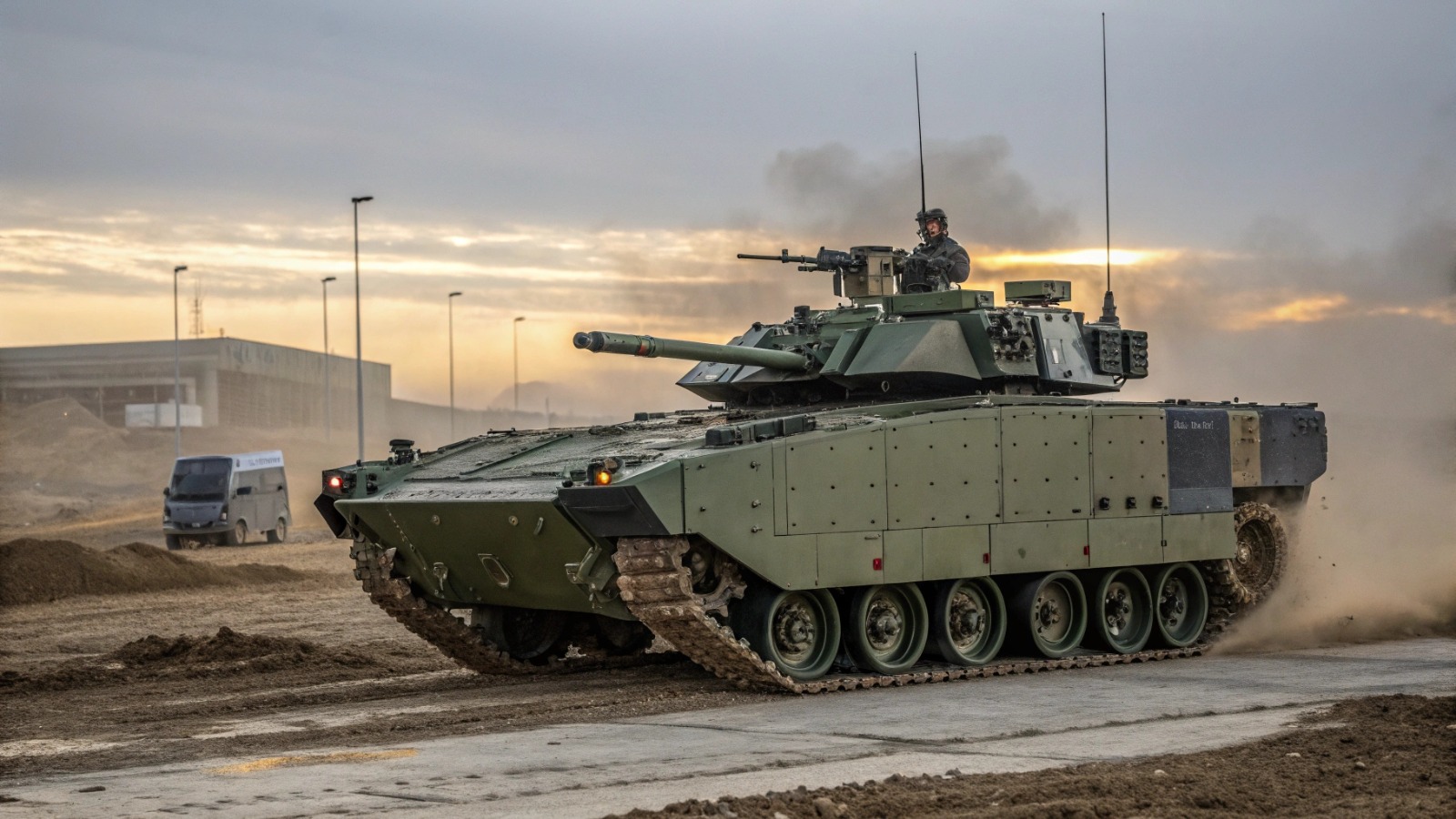
Italy’s push to modernize its armored fleet has taken a major step forward with a new order for 21 Lynx KF-41 infantry fighting vehicles from the Leonardo–Rheinmetall joint venture. The contract is the first under the Italian Army’s Army Armoured Combat System (A2CS) program, which plans to acquire roughly 1,000 vehicles to replace and expand existing mechanized platforms. Five of the initial Lynx units will feature Rheinmetall’s Lance turret, while 16 will carry Leonardo’s Hitfist 30-millimeter weapon system. The agreement also allows for future upgrades to standardize the fleet with Hitfist systems, options for 30 more vehicles, and the inclusion of training and simulation packages for crews. The first delivery is expected by late 2025. The KF-41 is the larger successor to the Lynx KF-31, introduced in 2016, and incorporates a modular design that enhances flexibility for diverse missions. Its architecture separates the base drive module from the mission module, allowing reconfiguration for roles ranging from troop transport to reconnaissance or battlefield command. With a combat weight of about 50 tonnes, the vehicle accommodates a crew of three plus eight soldiers. It is powered by an 850-kilowatt engine generating 1,140 horsepower and can reach speeds up to 65 kilometers per hour. Typically fitted with Rheinmetall’s Lance 2.0 turret, the Lynx can be armed with a 35-millimeter Wotan cannon and modular mission pods carrying Spike LR2 anti-tank missiles, loitering munitions, electronic warfare systems, or UAVs. The platform features active, passive, and reactive defenses designed to counter rockets and guided missiles. The vehicle’s modularity allows quick adaptation for various missions, including combat, logistics, medical evacuation, and recovery. For Italy, the Lynx contract marks a key step in developing a new generation of armored vehicles built around interoperability, advanced protection, and digital integration. For Leonardo and Rheinmetall, it strengthens their role in Europe’s defense industry as partners capable of delivering scalable, future-ready ground combat systems.