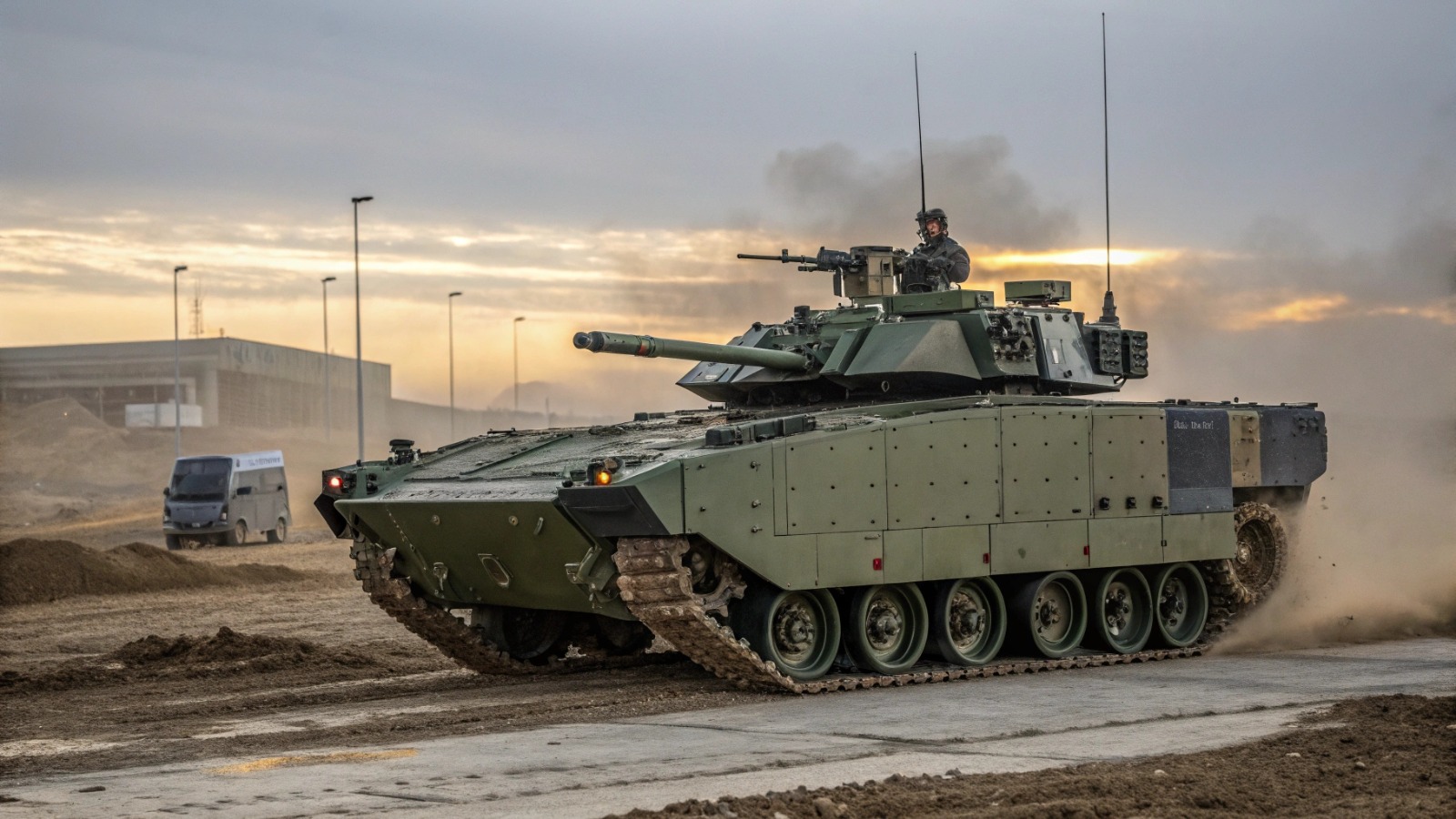
BAE’s New M109A7 Boosts Paladin Range

BAE Systems has developed the M109A7 52‑caliber howitzer to give the U.S. Army a quick bridge for its long‑range artillery requirements after the ERCA program halted .The system merges the Army’s existing M109A7 Paladin self‑propelled chassis with Rheinmetall’s L52 155 mm cannon, introducing a boost in firing range, rate of fire, and overall lethality .The M109A7 52 caliber offers an evolutionary step rather than a revolution — it preserves fleet compatibility while addressing the Army’s call for a lightweight, deployable solution capable of supporting large‑scale combat operations. By retaining the Paladin’s strong mobility, electric gun drive systems, and digital fire‑control networks, the new configuration delivers modern performance without requiring new support infrastructure .The Rheinmetall L52 cannon extends the howitzer’s reach to over 70 kilometers using precision rounds, matching the range of Europe’s most advanced artillery pieces while allowing the U.S. Army to reuse its existing vehicles and training regimens. BAE Systems officials said the goal is to expedite deployment and minimize procurement risk by modernizing within a current and trusted platform. The new howitzer will also be compatible with emerging precision‑guided munitions and future automated reloading technologies. Industry observers see the offer as a direct response to the Army’s post‑ERCA assessment, which favored “scalable modernization” over experimental next‑generation platforms. By 508 horsepower, it retains battlefield resilience and adds electrical capacity for command systems and advanced sensors. The Army considers the M109A7 52‑caliber its potential standard self‑propelled howitzer for the 2030s, replacing older M109 A6 Paladins. The initial demonstrator is undergoing evaluation at Yuma Proving Ground, with live‑fire testing scheduled in early 2026. If approved, production could start as soon as 2027. This project marks a renewed step toward integrated U.S.‑European defense cooperation and underscores BAE Systems’ commitment to delivering proven, cost‑effective solutions that meet modern artillery demands .

Dutch Join U.S. AI Combat Drone Initiative

The Dutch government has entered a formal agreement to join the U.S. Air Force’s Collaborative Combat Aircraft (CCA) program — an ambitious initiative building AI‑driven combat drones designed to operate with fifth‑generation fighter jets .The letter of intent, signed in Washington D.C. by State Secretary for Defense Gijs Tuinman ahead of the Netherlands‑U.S. Defense Industry Days, cements the Netherlands’ position as a pioneer in future autonomous air warfare research. Under the program, the Royal Netherlands Air Force will cooperate with the U.S. Air Force on joint development of unmanned systems controlled from the cockpit of manned fighters, integrating AI‑enabled sensors for reconnaissance, targeting, and electronic warfare. CCA platforms are envisioned as affordable “loyal wingmen” capable of conducting risky missions while freeing human pilots for strategic decision‑making. The Air Force Research Laboratory and its industry partners are developing these aircraft with modular payload bays, swarm networking capabilities, and predictive AI mission control software. For the Netherlands, participation offers early access to U.S. combat automation technologies and strengthens its industrial base through collaboration between Dutch aerospace suppliers and American prime contractors. This partnership is expected to align with AEGIS 2035 — the Dutch Defense Innovation Strategy that emphasizes AI, space assets, and human‑machine integration. The two governments plan to exchange data on air teaming and sensor fusion experiments conducted at Edwards AFB and Volkel Air Base. Defense leaders highlight that the CCA program’s flexible architecture will enable European partners to field compatible AI combat systems while adapting software for national security requirements. Dutch Defense spokespersons stressed that the initiative demonstrates confidence in transatlantic AI research ethics and co‑controlled autonomy. Experts believe Dutch participation could accelerate Europe’s progress in networked air defense and set a precedent for cooperative AI development within NATO. The agreement also strengthens U.S.‑Dutch industrial ties — creating future export openings for AI mission software and autonomous test technologies developed under shared standards. As global air combat evolves toward distributed autonomy, the Netherlands’ entry into the CCA program positions it among the most advanced air forces pioneering AI‑integrated combat systems worldwide.

Berlin, Hague Expand Boxer Fleet With SCHAKAL

The OCCAR‑led European Boxer Program has entered its next phase with Germany and the Netherlands committing €4.5 billion for 222 new Boxer‑based Schakal infantry fighting vehicles, an investment that advances NATO’s protected mobility agenda and European industrial integration .Signed in Bonn on October 17, 2025, the agreement was described by OCCAR as a “historic boost” to joint land capability development .The Schakal (IFV), co‑developed by Germany and the Netherlands, marries the modular 8×8 Boxer drive platform with the Puma RCT30 uncrewed turret, integrating a 30 mm autocannon and advanced fire‑control optics to enhance mobility and survivability in modern battlefields .Artec GmbH —the Rheinmetall/KNDS joint venture— will lead production and deliver 150 vehicles to Germany and 72 to the Netherlands between 2027 and 2031 .Each platform includes options for anti‑tank protection, drone defense, and attack‑detection systems suited to urban and expeditionary missions. The contract covers spare parts, training kits, and initial in‑service support, ensuring first‑rate logistical readiness .OCCAR officials said the procurement pushes the agency’s overall Boxer program value beyond €10 billion and cements the 8×8 vehicle as Europe’s baseline for modular combat vehicles. Germany also ordered new driver‑training and ambulance Boxer variants, featuring updated C4I command modules and medical systems to improve frontline casualty care .For the Bundeswehr, the Schakal will serve as the centerpiece of new “medium forces,” bridging the gap between light motorized and heavy armored units. Analysts expect the deal to generate thousands of industrial jobs while supporting cross‑border supply chains. Beyond tactical utility, the agreement reflects a strategic commitment by Berlin and The Hague to deepen defense integration and reduce procurement delays through joint program management .This approach enhances Europe’s self‑reliance in armored mobility and ensures consistent standards for future Boxer variants and upgrades. As a result, OCCAR’s newly expanded portfolio delivers not only next‑generation combat vehicles but also a blueprint for sustained European defense cooperation within NATO frameworks.