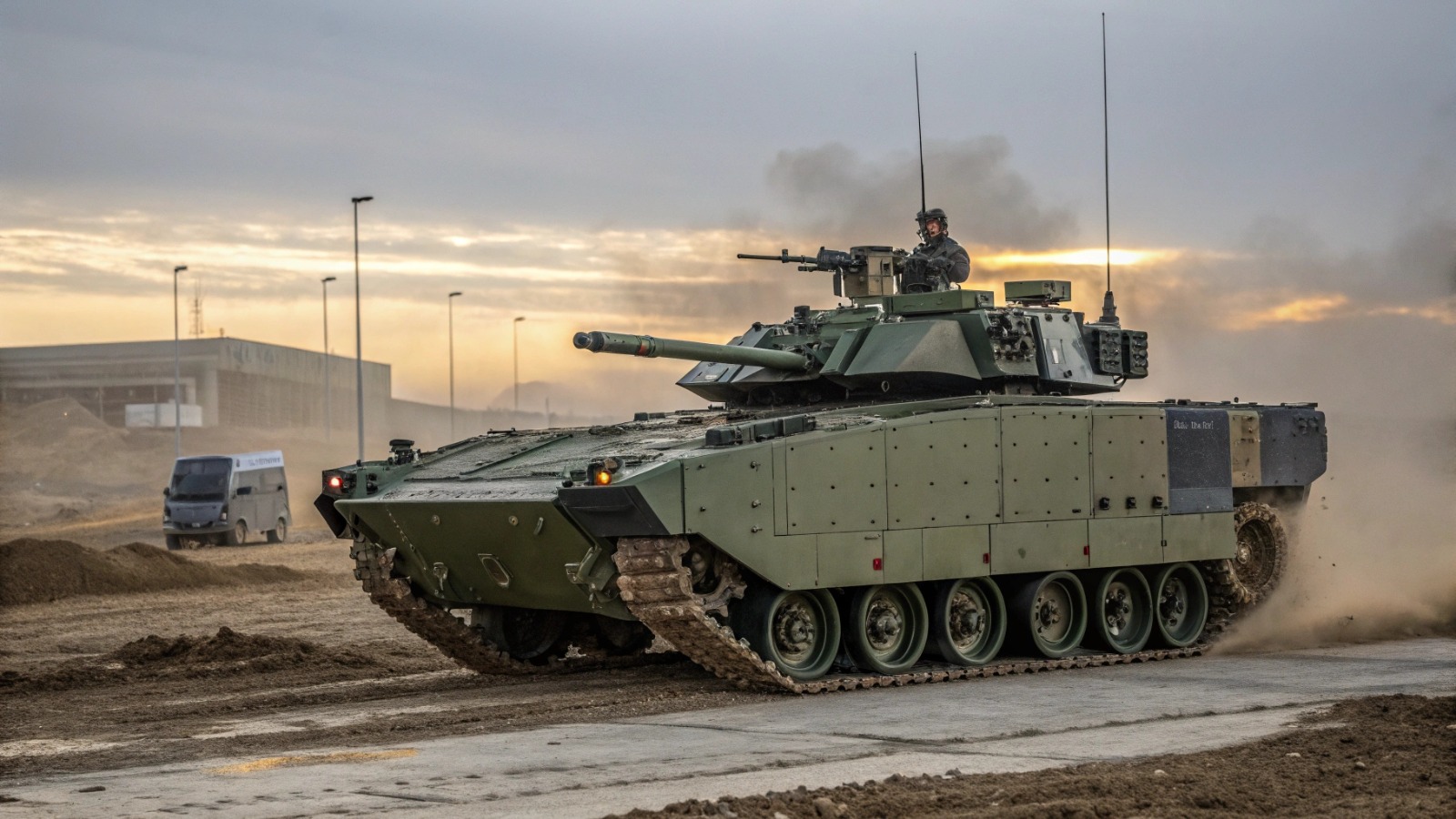
The OCCAR‑led European Boxer Program has entered its next phase with Germany and the Netherlands committing €4.5 billion for 222 new Boxer‑based Schakal infantry fighting vehicles, an investment that advances NATO’s protected mobility agenda and European industrial integration .Signed in Bonn on October 17, 2025, the agreement was described by OCCAR as a “historic boost” to joint land capability development .The Schakal (IFV), co‑developed by Germany and the Netherlands, marries the modular 8×8 Boxer drive platform with the Puma RCT30 uncrewed turret, integrating a 30 mm autocannon and advanced fire‑control optics to enhance mobility and survivability in modern battlefields .Artec GmbH —the Rheinmetall/KNDS joint venture— will lead production and deliver 150 vehicles to Germany and 72 to the Netherlands between 2027 and 2031 .Each platform includes options for anti‑tank protection, drone defense, and attack‑detection systems suited to urban and expeditionary missions. The contract covers spare parts, training kits, and initial in‑service support, ensuring first‑rate logistical readiness .OCCAR officials said the procurement pushes the agency’s overall Boxer program value beyond €10 billion and cements the 8×8 vehicle as Europe’s baseline for modular combat vehicles. Germany also ordered new driver‑training and ambulance Boxer variants, featuring updated C4I command modules and medical systems to improve frontline casualty care .For the Bundeswehr, the Schakal will serve as the centerpiece of new “medium forces,” bridging the gap between light motorized and heavy armored units. Analysts expect the deal to generate thousands of industrial jobs while supporting cross‑border supply chains. Beyond tactical utility, the agreement reflects a strategic commitment by Berlin and The Hague to deepen defense integration and reduce procurement delays through joint program management .This approach enhances Europe’s self‑reliance in armored mobility and ensures consistent standards for future Boxer variants and upgrades. As a result, OCCAR’s newly expanded portfolio delivers not only next‑generation combat vehicles but also a blueprint for sustained European defense cooperation within NATO frameworks.